Six Experiments in Separating the Ego Self From the Observing Self
By Beyond the Couch Counseling
At Beyond the Couch Counseling, many of the people we work with describe a similar problem, even if they use different words. They feel overwhelmed by their thoughts. Stuck inside their reactions. Pulled around by anxiety, self-criticism, or constant mental noise.
Often they say they want to be “more present.”
In therapy, that phrase usually gets translated into wanting relief. Fewer intrusive thoughts. Less anxiety. More calm. While those goals are understandable, they can accidentally miss something important.
From a clinical perspective, presence is not a feeling state. It is not calm, grounding, or emotional regulation. Presence is a capacity. It is the ability to notice thoughts, emotions, and impulses without automatically becoming them.
Much of psychological distress is not caused by the presence of thoughts or emotions, but by identification with them. When internal experiences are experienced as “me” rather than as mental events, reactivity increases and choice narrows.
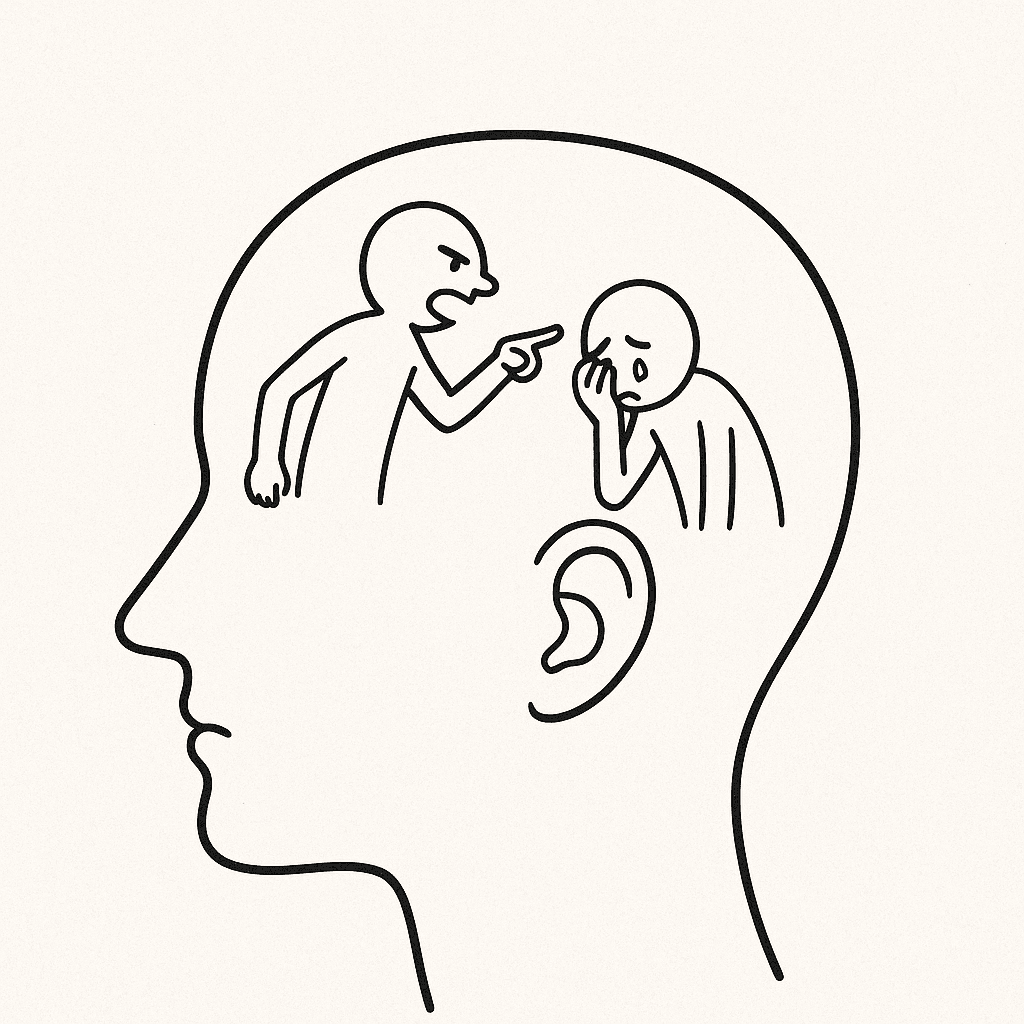
Many therapeutic and contemplative frameworks describe a distinction between two modes of experience. One is the ego self, the automatic system that thinks, reacts, predicts, narrates, and tries to manage outcomes. The other is the observing self, the aspect of awareness that notices these processes without needing to intervene.
The exercises below are not relaxation techniques. They are not meant to suppress thoughts or emotions. They are designed to help make the distinction between these two selves experiential rather than intellectual. Even brief access to the observing self can restore a sense of agency and flexibility, which is often where meaningful therapeutic work begins.
Exercise 1: Choosing Attention
Sit down and select an ordinary object in the room. Avoid anything emotionally charged or meaningful. The purpose of this exercise is functional, not symbolic.
Before doing anything else, notice where your attention already is. It is usually on a thought, a feeling, or a mental image.
Now place your visual attention on the object.
Do not stare. Just look.
Ask yourself:
Am I actively placing attention here, or is my attention drifting and landing without my involvement?
If attention drifts, do not correct it immediately. First notice that it drifted. That noticing is important.
Then deliberately bring attention back to the object. Do this slowly, as if you were moving something fragile.
Repeat this sequence several times:
attention drifts
you notice
you choose to place it again
At some point, you will notice a clear difference between attention that moves on its own and attention that is directed. That difference is not subtle once seen.
The automatic movement of attention belongs to the ego self.
The ability to place attention belongs to the observing self.
The exercise is complete when that distinction becomes obvious.
Exercise 2: Labeling the Automatic Process
Set aside ten minutes where you are not trying to meditate or change anything about your experience.
Live your life as you normally would.
Each time you notice mental activity such as planning, worrying, replaying conversations, judging yourself or others, or narrating what you are doing, silently label it:
Automatic.
Say it once. Do not repeat it. Do not emphasize it.
After labeling, do not follow the thought further. Instead, place attention on something sensory and neutral. A sound in the room. The weight of your body. The sensation of breathing.
If another thought immediately appears, label it again and repeat the process.
This is not an attempt to quiet the mind. The ego self will continue to generate content. That is expected.
What changes is your position relative to that content.
Each time you label a thought as automatic, you are no longer inside it.
This exercise builds the capacity to recognize mental activity without being carried by it.
Exercise 3: Locating Yourself
Stand still and pause.
Say to yourself:
I am here. I am in this room.
Then check carefully whether that statement is accurate.
If it is not, identify where you actually are. Not metaphorically, but functionally. You may notice that your attention is in the future, the past, or inside a mental conversation.
Once you identify where attention is located, do not criticize it.
Now deliberately bring attention back to physical location.
Feel your feet making contact with the floor.
Notice the weight of your body.
Sense the outline of your body in space.
Stay with physical sensation long enough for it to register clearly.
The ego self operates primarily in time.
The observing self operates in direct experience.
This exercise trains the ability to relocate yourself out of mental abstraction and back into present-moment awareness.
Exercise 4: Listening Without Interfering
Sit quietly and allow thoughts to arise without attempting to guide or suppress them.
Imagine you are listening to someone else speak from another room. You are not involved in the conversation. You are only listening.
As thoughts appear, notice their characteristics:
their tone
their speed
their urgency
their repetition
Do not engage with the content. Do not respond internally.
Now ask yourself:
Who is listening to this?
Do not answer verbally. Simply notice that listening is occurring.
Thoughts come and go. Listening remains.
This exercise demonstrates that thoughts are events, not identities.
The observing self is not what speaks. It is what hears.
Exercise 5: Removing the Condition
Ask yourself the following question and wait for an answer:
What needs to happen before I can be here?
Do not rush past the response. It often appears as a rule, requirement, or expectation.
Once the answer is clear, ask a second question:
Is this actually required for awareness to be present, or is it a demand created by the ego self?
Do not try to eliminate the condition. Do not reason with it.
Simply notice that there is a condition being imposed and an awareness that can observe it.
Presence often emerges when the observing self realizes it does not need permission from the ego self to exist.
Exercise 6: Changing Seats
Place two chairs facing each other.
Sit in the first chair and allow the mind to function normally. Let thoughts arise without restriction. Planning, judging, worrying, and narrating are all welcome.
After one or two minutes, stand up and move to the second chair.
From this chair, look at the first one.
Notice what was happening there. Notice the tone and urgency of the mental activity.
Now ask:
Who is able to observe this?
Remain in the second chair long enough to feel the difference in position. Not emotionally, but structurally.
Switch chairs again. Allow the ego self to resume.
Then return to the observing chair once more.
Repeat this process until the distinction between the two positions becomes clear.
The ego self continues to operate.
The observing self does not interfere.
The exercise is complete when you can recognize, without effort, which position you are currently occupying.
Exercise 7: Raw Sensation vs Intepreation
Sit quietly and bring attention to the body.
Notice the most obvious physical sensation present right now. This could be pressure, tightness, warmth, movement, or discomfort.
Describe it internally using only sensory language.
For example: pressure, vibration, heat, contraction.
Avoid interpretation.
Now notice what else appears immediately after. Thoughts, images, judgments, emotions, predictions.
That is interpretation.
Do not remove it. Simply distinguish it.
Return attention to the raw sensation again.
Then notice the commentary that follows.
Repeat this several times.
Ask yourself:
What is actually happening in the body?
What am I adding to it?
The observing self is the one that can make this distinction.
The ego self collapses the two into a single experience.
This exercise is complete when you can tell the difference between sensation and interpretation without effort.
Closing
In our work at Beyond the Couch Counseling, we are less interested in helping people eliminate thoughts or control emotions, and more interested in helping them change their relationship to their inner experience.
The ego self is not a problem to be fixed. It is a necessary system that allows us to function, plan, and make sense of the world. Difficulty arises when that system becomes the only place we know how to live from.
Presence, clinically speaking, is the ability to recognize when you are fused with automatic mental activity and when you are observing it. This ability is not permanent and it does not need to be. It strengthens through repetition, not perfection.
Each moment of noticing that you have been caught in automatic thinking is itself an instance of presence. Over time, these moments create more psychological flexibility, more choice, and more room to respond rather than react.
That space is often where meaningful therapeutic change begins. Not because life becomes easier, but because you are no longer required to live it on automatic.
If you’re interested in building awareness beyond the blog post reach out to us today to schedule a free consultation with one of our therapists: Admin@beyondthecouchcounseling.com