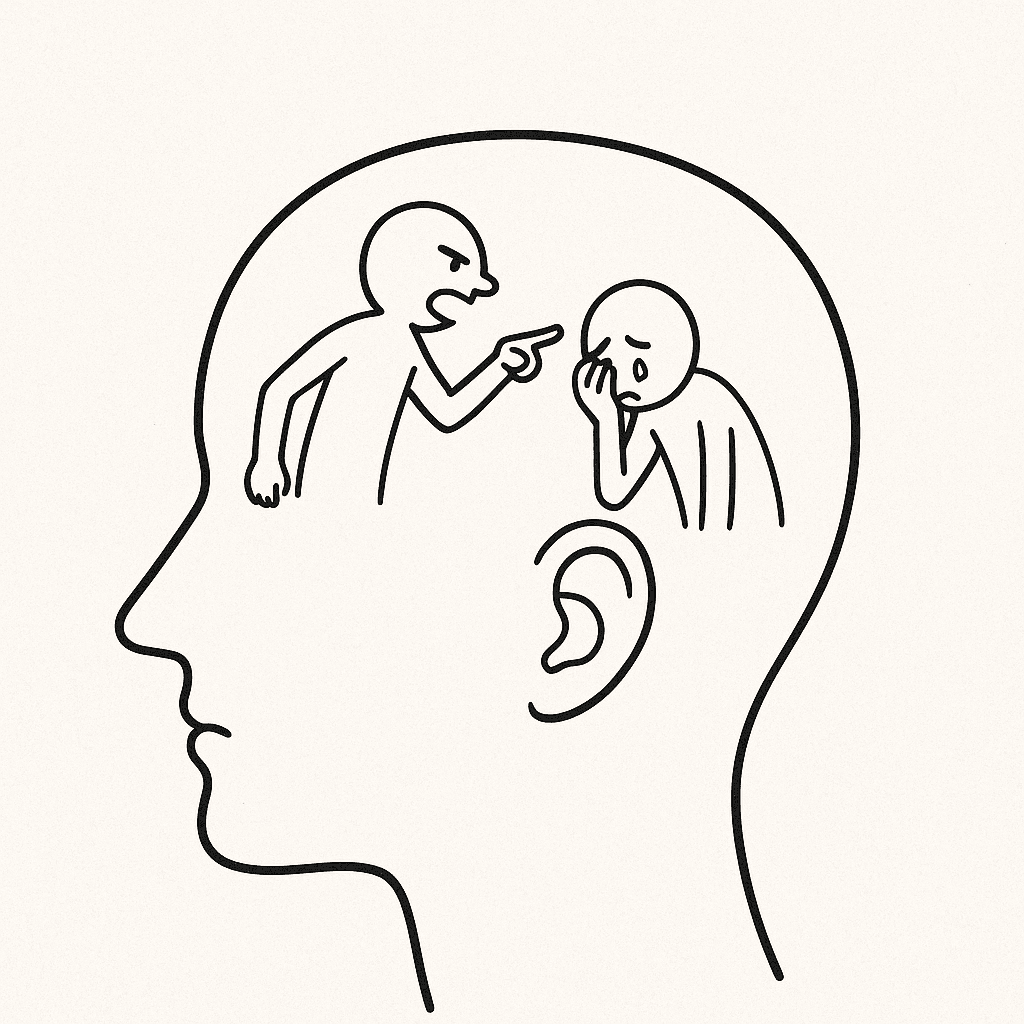
Most of what happens in a therapy session is invisible to the naked eye.
Two people sit down. One of them starts telling the truth about what it is like to live inside their own head, and slowly, something that felt permanently stuck begins to move. A fear gets understood differently. A pattern that ran the show for years finally gets seen in daylight and loses some of its authority. Someone says the thing they have spent a decade not saying, and the room does not end.
I find this work endlessly interesting.
But there is a participant in every therapy session who often does not get mentioned by name, despite having been present for the entire conversation.
The body.
We talk about the mind, in mental health circles, as though it operates from a tidy control room above the neck, sending instructions down to the rest of the operation. Spend five minutes with someone in the middle of a panic attack and that theory does not survive contact with reality. The heart is doing something it was not asked to do. The stomach has an opinion. The shoulders have crept up near the ears without permission. The mind notices all of this, gets frightened by what it notices, and the whole system feeds itself.
Nobody is running this from a control room. Everybody is in the room.
This is why I have become interested in the research connecting massage and mental health, and it is also, as it turns out, part of why I am writing this post at all.
My friend Brett Kane recently wrote a thoughtful piece on this exact subject and was kind enough to mention our work at Beyond the Couch Counseling in it. This is my way of saying thank you, and of returning the favor with a few thoughts of my own.
Bessel van der Kolk, whose work has explored the complicated relationship between traumatic experience, memory, and the body, references a survey of 225 people who survived the evacuation of the World Trade Center on September 11th. Asked what had helped them recover, they ranked massage as the second most helpful thing they tried.
Not last on a long list. Second. That is the kind of detail that makes you put the book down for a second.
The wider research points in the same direction, though more quietly, which I find more convincing than a bold claim would be. A meta-analysis combining seventeen randomized trials and 786 participants found massage therapy was associated with reductions in depressive symptoms. Studies involving people with chronic pain have found associated improvements in anxiety. Other research has explored changes in sleep, stress, and general well-being following massage.
None of this suggests massage replaces mental health treatment, and no one serious claims that it does. It suggests something narrower, and perhaps more interesting: the body is not a bystander in emotional recovery. It has its own vote.
None of this should surprise anyone who has left a massage feeling like a different, looser person than the one who walked in an hour earlier. But what interests me most is not the obvious physical relief. It is what happens alongside it.
For an hour, attention moves differently. Breathing may slow without much effort. Muscles that have been working overtime finally get a different message. Sensation gets to exist without being interpreted, managed, or turned into a task. Someone else is doing the caretaking, and the only job left is to be a body for a while.
For people who have spent their lives being useful to everyone around them, that last part is harder than it sounds. I have watched capable, insightful people nearly come undone at the instruction to do nothing at all for sixty minutes.
This connection between body and mind is not just something I have been reading about. I have been watching my colleagues explore it in our own therapy rooms.
This connection between body and mind is not just theory. It is part of the work happening every day in our own therapy rooms. Sarita Andrews and Masha Erofeeva incorporate somatic approaches into their work, while Treecy Meier uses EMDR.
There is good reason these approaches have earned a meaningful place in psychotherapy. Sometimes a person can understand exactly why they feel the way they do and still find that understanding alone does not change the experience. The body can continue sounding an alarm long after the mind has figured out there is no fire.
This is where somatic work can be especially valuable. It gives us another way into experiences that are not always changed through insight alone. I have a great deal of respect for the work Sarita, Masha, and Treecy are doing in this area and for the care they bring to it. Their work is a good reminder that therapy does not have to choose between taking thoughts seriously and taking the body seriously. A person arrives with both.
And care for that person does not begin or end at the therapy room door.
Brett Kane owns Brett Kane Bodyworks here in Grand Rapids. We are fortunate to have many skilled massage therapists in our community, each bringing a different personality and approach to their work. Brett is someone I have known personally, and I have always appreciated how seriously he thinks about the experience of the person on the other side of his work.
A good massage therapist brings knowledge of the body, but there is a human element to the work that is harder to put on a résumé. Paying attention to comfort. Respecting boundaries. Communicating well. Understanding the difference between helping someone relax and expecting them to.
In my conversations with Brett over the years, I have been impressed by how naturally he thinks about these things. That is one of the reasons I wanted to share his writing here.
Mental health has never lived only inside a room with two chairs in it. It lives in relationships, in sleep, in how we speak to ourselves when no one else is listening, in how often we laugh in a given week. And, it turns out, in the body, the same one we so often try to think our way around instead of listening to.
Sometimes meaningful change comes from understanding something true about yourself for the first time. Sometimes it comes from finally doing the difficult thing you have avoided for years. Sometimes it comes from discovering that another person can know something vulnerable about you and simply stay in the room.
And sometimes it looks like stepping off a massage table and realizing you have not felt this at ease in months.
I am glad to work in a field with room to hold all of that as real.
If you are curious about the connection between massage and mental health, Brett’s piece is worth reading. And if you have been thinking about massage yourself, you can learn more about Brett and his approach at Brett Kane Bodyworks.